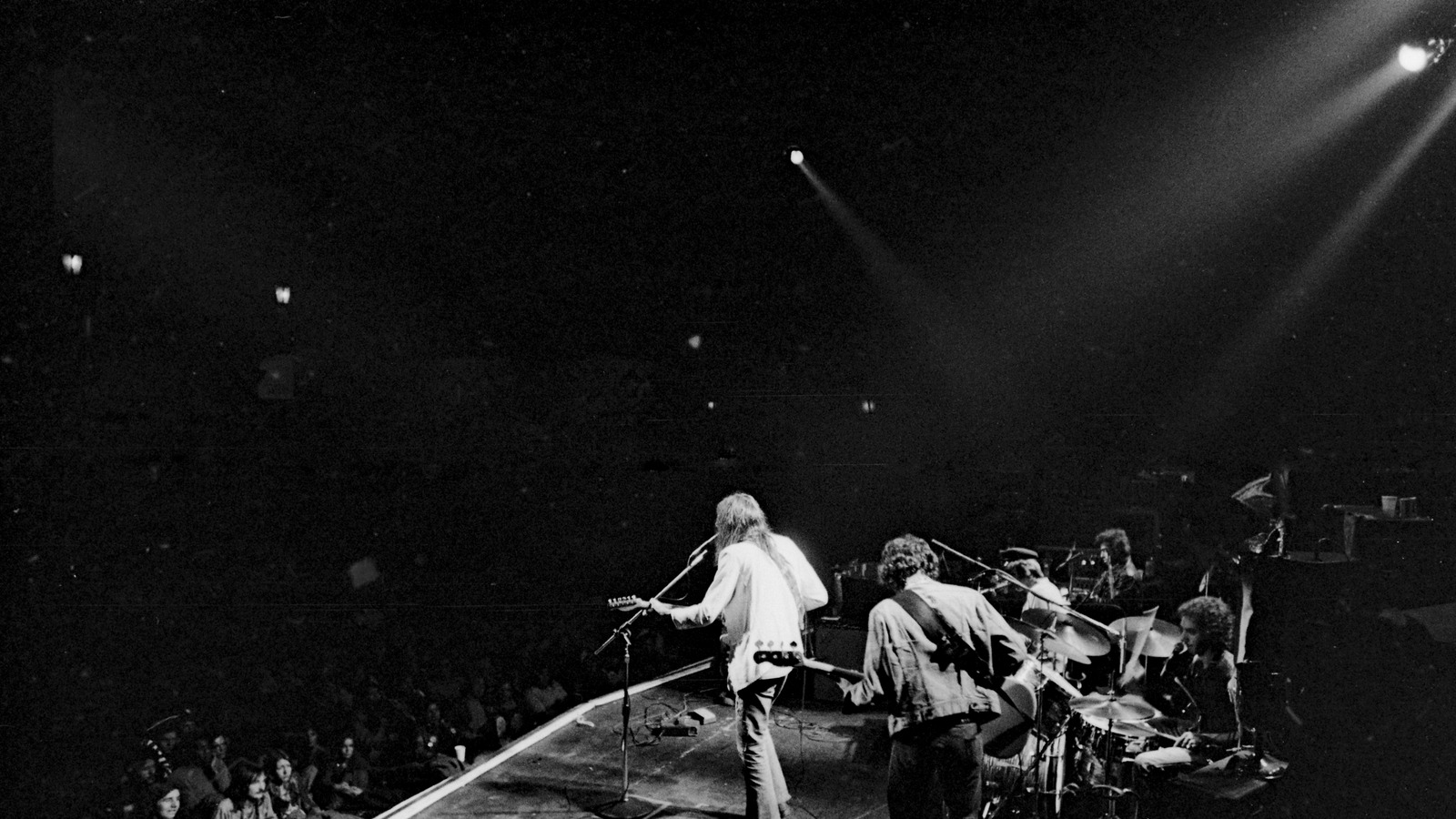
Over a career spanning more than six decades, the Canadian-born singer-songwriter has continuously defied categorization. From his early days in the 1960s with the short-lived band the Mynah Birds—which featured a young Rick James—to his pivotal roles in Buffalo Springfield and Crosby, Stills, Nash & Young, the restless artist has cycled through folk, country-rock, synth-pop, and roaring garage rock. Yet, despite his eclectic path, his raw, distortion-heavy work with Crazy Horse cemented a distinct reputation that would ripple through the alternative rock landscape for generations: the Godfather of Grunge.
While the moniker is frequently debated by music purists who point to underground punk, hardcore, or sludge metal as the true crucibles of the Seattle sound, the connection in spirit and approach remains undeniable. Tracks like the sprawling guitar epic "Cortez the Killer" from 1975's Zuma and the explosive punk-inflected ethos of 1979's Rust Never Sleeps laid an essential blueprint. Listeners remarked on the sonic lineage, noting the raw hallmarks of that aesthetic: "overdrive pedal, quiet/loud/quiet, cynical lyrics commenting on society, half-assed guitar solo, plaid, long hair, jeans, work boots."
Tracing the Distortion
The sheer volume of Young's influence on the 1990s alternative explosion is well-documented. Icons like Kurt Cobain famously quoted his lyrics, and Pearl Jam collaborated directly with him on the 1995 album Glitter Ball. Other major artists across the alternative spectrum—including members of Soundgarden, Alice in Chains, Mudhoney, and Dinosaur Jr.—have routinely cited his abrasive guitar work and unpolished production values as a foundational touchstone.
Debates often arise over whether the title of godfather truly fits, with some arguing that contemporaries or underground pioneers deserve equal credit. Others suggest that the label speaks less to direct musical invention and more to an enduring artistic philosophy: "It's more as a matter of approach and style than a direct musical influence." By refusing to settle into a comfortable, polished middle-of-the-road pop sound, he demonstrated how an aging artist could maintain fierce independence and credibility.
Still Running After All These Years
Beyond the debates over genre lineage, the sheer scope of the catalog remains staggering. Operating as a musical searcher who routinely abandons commercial safety for creative experimentation—as seen in his brief detours into synth-pop and rockabilly—he has cultivated one of the deepest discographies in modern rock history.
Remarkably, the momentum has not slowed. Decades after defining a raw, feedback-drenched aesthetic that terrified record executives and electrified rebellious teenagers, the artist continues to write, record, and tour, proving that true creative stamina outlasts fleeting genre tags.

